If you had told me a few years ago that I’d step away from social media, I probably would have laughed. Instagram, Facebook… they were my lifelines — a quick scroll between diaper changes, a peek at what friends were up to, a way to share my own little victories.
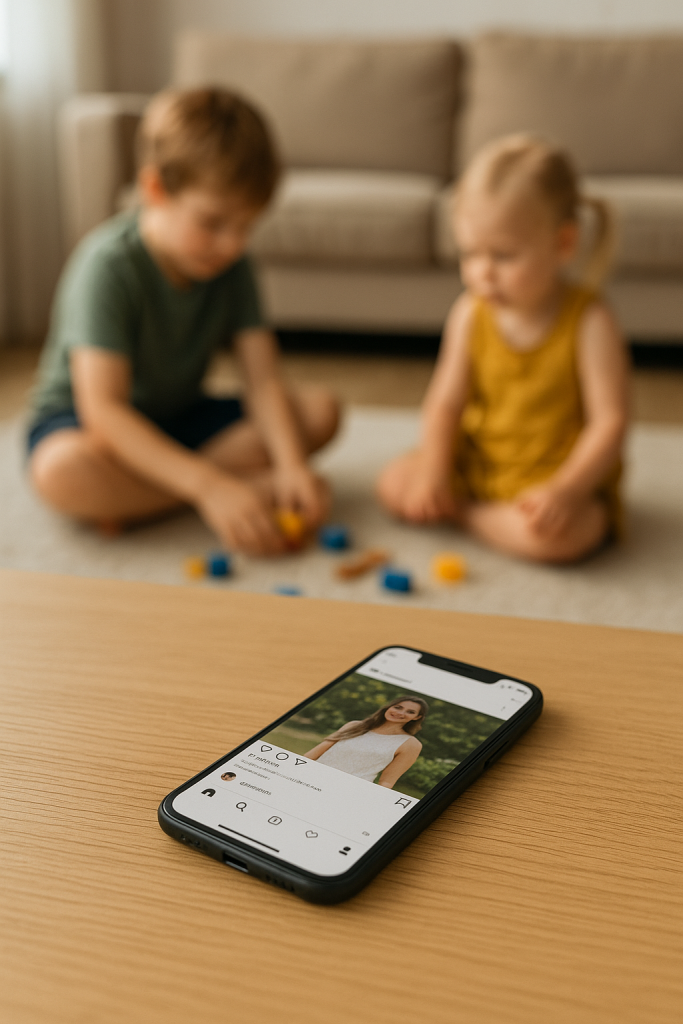
But somewhere along the way, my harmless habit started to feel heavier. One night, I was so deep into a feed of flawless kitchens and dream vacations that I didn’t hear the baby monitor until my husband gently said, “You didn’t hear that, did you?” That moment stopped me cold. I’d been so wrapped up in someone else’s life that I almost missed a moment in my own.
It turns out, that heaviness wasn’t just in my head — research confirms what many of us feel.
The Quiet Toll of the Scroll
Social media can be fun, inspiring, and even uplifting — but it can also quietly chip away at our mental wellness.
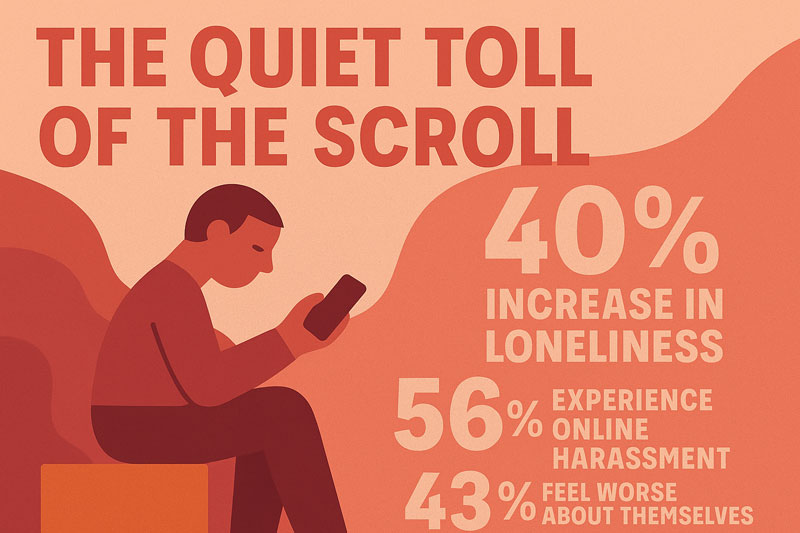
- A 2025 randomized trial found that deactivating Facebook for six weeks improved a combined measure of happiness, depression, and anxiety — especially for women under 25.
- Another 14-day abstinence study showed significant drops in screen time and body-image dissatisfaction (BMC Psychology, 2024).
- A 2024 systematic review linked problematic social media use to both poorer mental health and worse sleep — and poor sleep is a well-known trigger for mood decline.
The American Psychological Association reports that 88% of people feel stressed from comparison on social media. And Pew Research Center found 60% of users feel inadequate after viewing others’ posts. Those are more than numbers — they’re snapshots of how deeply this digital pressure affects us.
Comparison, Perfection, and the Search for Validation
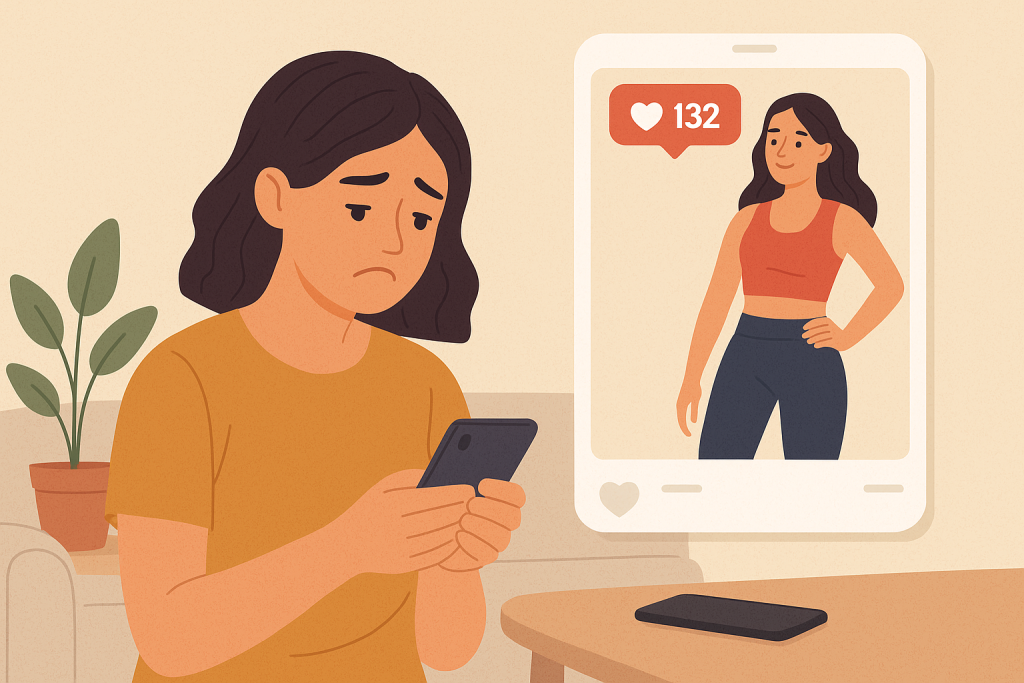
In my own life, I’ve seen how easy it is to get caught in the cycle: scroll → compare → feel “less than” → post something for validation → repeat.
Studies confirm that upward comparison — looking at people we think are “better off” — often leads to negative self-evaluation and lower self-esteem. Instagram’s own internal research (released publicly in 2021) found the platform worsened body image for 1 in 3 teen girls who already struggled.
And it’s not just teens. As moms, we compare our homes, our bodies, our parenting styles to what’s posted online. It’s exhausting — and it’s not real life.
Realigning Priorities
The night I missed the baby monitor was my wake-up call. I started setting boundaries that research shows can help:
- Curating my feed — unfollowing accounts that triggered comparison, following those that made me feel encouraged.
- Creating digital-free zones — no scrolling during family meals, bedtime, or early mornings.
- Replacing mindless scrolling with offline hobbies — reading, baking with my kids, and walks without my phone.
It’s not about quitting social media completely (though short breaks are proven to help); it’s about reclaiming your attention for the moments that truly matter.
Protecting Our Kids from Digital Harm
As a mom, my heart aches when I think about how today’s kids have to navigate an online world that can be both exciting and incredibly challenging. According to Pew Research, 46% of U.S. teens have experienced some form of cyberbullying, a statistic that is as heartbreaking as it is alarming. The U.S. Surgeon General’s 2025 advisory goes even further, stating that we cannot conclude social media is truly safe for children and teens. This report urges parents, caregivers, and tech companies to take proactive steps, such as creating family media plans, implementing safer design features, and engaging in active monitoring of online activity. These recommendations highlight just how essential it is to guide and protect our kids as they grow up in a digital age.
Here’s what’s worked in my home:
- Open conversations about kindness online and the dangers of comparison.
- Ground rules for tech time and apps.
- Encouraging hobbies and friendships offline.
- Modeling healthy phone use myself.
When It’s Time to Get Help
Sometimes, the impact of social media on our mental health goes beyond what we can manage with self-care, screen limits, or willpower alone. If you find yourself experiencing persistent anxiety, constant mood swings, irritability, or a growing loss of interest in the offline activities you once enjoyed, it may be a sign that it’s time to reach out for professional support.
It’s important to remember that these feelings don’t have to be “extreme” to matter. You don’t need to wait until you’ve hit rock bottom before asking for help. Mental health struggles often build slowly, and the earlier you address them, the easier it is to create positive change.
While everyone’s experience is different, some common signs that social media may be taking a more serious toll on your well-being include:
- Frequent anxiety or sadness after scrolling — You notice your mood consistently dips after time online, even if nothing “dramatic” happened.
- Obsessive checking — You feel compelled to refresh your feed or check notifications multiple times an hour, even when you know it’s not necessary.
- Sleep problems — You stay up late scrolling or wake up in the night to check your phone, leaving you exhausted the next day.
- Social withdrawal — Spending less time with friends and family in person because online engagement feels easier or more rewarding.
- Comparison spiral — Your sense of self-worth feels increasingly tied to likes, comments, or how your life stacks up against others online.
- Physical symptoms — Headaches, tension, or fatigue related to excessive device use and emotional stress.
If these patterns sound familiar, you’re not alone — and they’re not a sign of weakness. They’re a sign that your brain and body are signaling for a change.
A Balanced Relationship with Social Media
Social media itself isn’t the villain. It can connect us, make us laugh, and even educate us. But it’s a tool — and like any tool, how we use it determines its impact.
By recognizing the signs of digital stress, practicing mindful curation, and protecting both ourselves and our kids, we can create a healthier, more intentional online life.
From one mom to another: your worth isn’t in a filter, a follower count, or a feed. It’s right here, in the moments you live offline — and those are worth protecting.
Quick Takeaways: Recognizing the Impact of Social Media on Mental Health
| Theme | Key Points | Action Steps |
|---|---|---|
| Mental Health Effects | Prolonged use linked to anxiety, depression, poor sleep (2024 review). 88% feel stressed from online comparison; 60% feel inadequate after viewing others’ posts. | Limit daily screen time; schedule offline activities; practice mindful scrolling. |
| Comparison & Perfection | Upward comparison lowers self-esteem; Instagram worsened body image for 1 in 3 teen girls who already struggled. Moms often compare homes, bodies, and parenting styles. | Curate your feed; unfollow triggers; focus on your own values and wins. |
| Impact on Families | 46% of U.S. teens have been cyberbullied; Surgeon General warns we can’t confirm social media is safe for kids. | Create a family media plan; discuss online kindness; model healthy device use. |
| Validation Cycle | Likes/comments give short-term boosts but can erode self-worth if over-relied on. | Build self-worth offline; invest in hobbies, relationships, and personal goals. |
| Finding Balance | Social media can connect and inspire, but it’s a tool — mindful use matters. | Designate tech-free zones; keep devices out of bedrooms; prioritize face-to-face connection. |
Leave a Reply